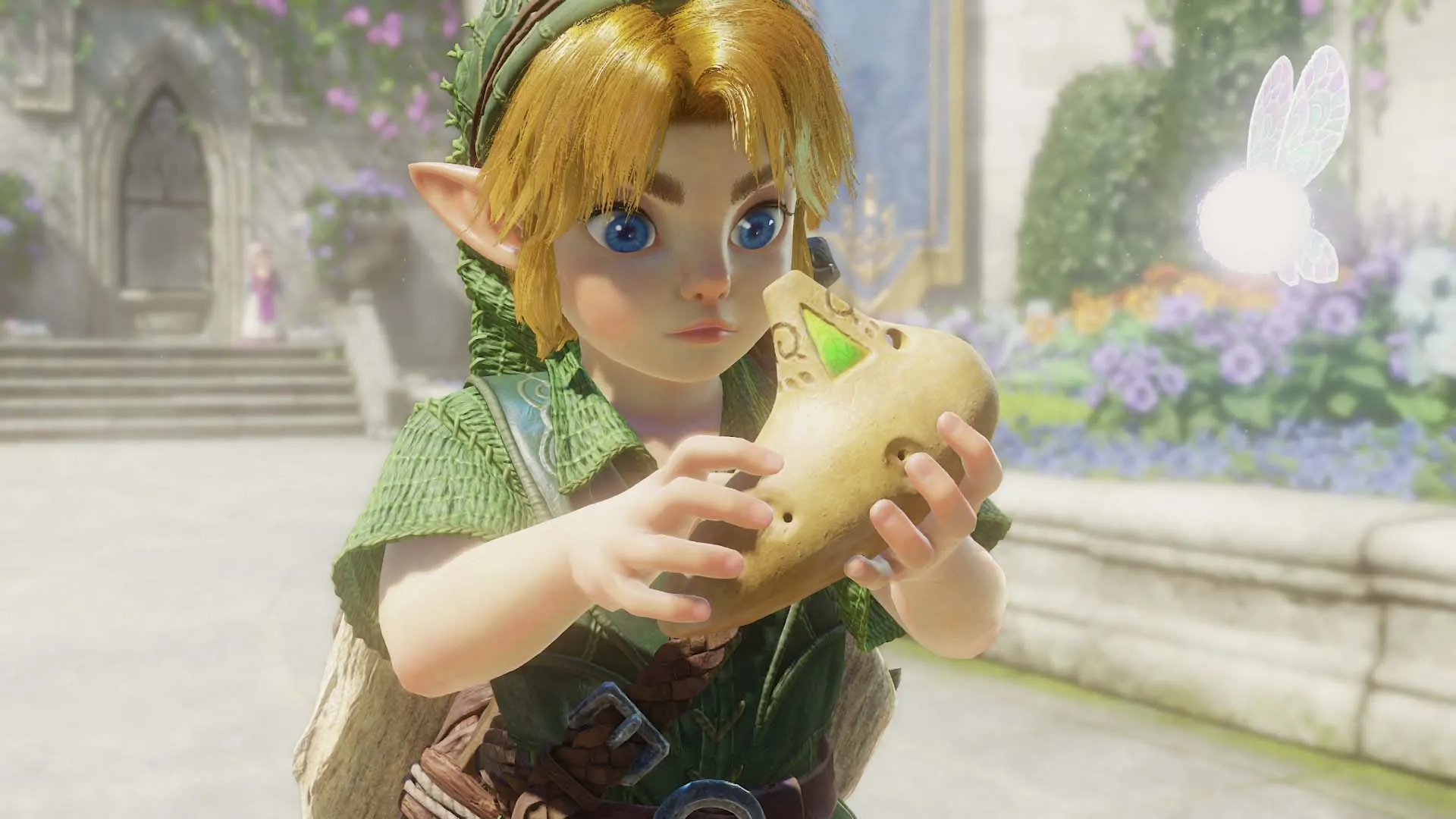
No. The Switch 2 remake of The Legend of Zelda: Ocarina of Time, out today, doesn’t use DLSS, even though the console supports it. According to Digital Foundry’s tech review, it runs at a steady 60 fps instead, docked and handheld, with a dynamic resolution of up to 1440p on a TV.
| Frame rate | Resolution | |
|---|---|---|
| Switch 2 remake (2026) | 60 fps, docked and handheld | Dynamic, up to 1440p docked, around 1080p in heavy scenes |
| Ocarina of Time 3D (2011) | 30 fps | 400×240 (3DS top screen) |
| Nintendo 64 original (1998) | 20 fps | 240p |
Instead of DLSS, Digital Foundry believes the game uses an FSR-style upscaler with SMAA anti-aliasing. Nintendo hasn’t confirmed it. The cost shows up as some shimmering on fine detail, and that’s the one area where Digital Foundry thinks DLSS would have made a real difference.
Does it matter?
Not much, in my view. DLSS earns its place on the Switch 2 in demanding ports like Cyberpunk 2077, where the console renders far below the output resolution and needs the AI upscaler to make up the difference. Ocarina of Time is a remake of a 1998 game with small areas and simple scenes. It’s already rendering at 1080p or above and holding 60 fps, so DLSS would mostly have cleaned up edges, not saved the performance.
The number that matters here is the frame rate. Going from 20 fps on the N64 to a locked 60 changes how the combat and the camera feel far more than any upscaler would. If you’re sensitive to shimmering, you’ll notice it most on a large TV; on the handheld’s smaller screen it should be less of an issue.
The rest, briefly
- Reviews: 96 on Metacritic, the highest-rated game of 2026 so far. The N64 original still holds 99.
- Price: $59.99 digital, $69.99 physical. Switch 2 only.
- Who made it: Nintendo’s own EPD Production Group No. 3, not Grezzo, the studio behind the 3DS version.
- The “removed” warp points: producer Eiji Aonuma says the team added extra warp points during development, then took them out because they cut out too much of the exploration.
And for PC players: there’s no official PC version, and Nintendo doesn’t release its games on PC.
Sources: Nintendo Life on Digital Foundry’s tech review, My Nintendo News, VGC on the Metacritic score, Forbes on price, LevelUp on the developer, Siliconera on the warp points.