,000
Should you build now or wait? Budget gaming PC FAQ Sources A $1,000 gaming PC used to mean a comfortable 1440p machine. In 2026 it barely exists. A global memory shortage, driven by AI data centres buying up memory chips, has made RAM several times more expensive than a year ago, pushed SSD prices up and lifted graphics cards well above their launch prices. Tom’s Hardware has even stopped including RAM in its build totals.
So instead of squeezing a build under an arbitrary number, here’s what a sensible budget gaming PC really costs right now, with parts you can actually buy. There are two versions: a modern AM5 build with an upgrade path, and an AM4 build that saves money with cheaper DDR4 memory and gets close to $1,000. Prices are US prices as of late October 2026 and change quickly, so check before you buy.
Short answer: build around a GeForce RTX 5060 , the best graphics card you can reliably buy for under $500. With a Ryzen 5 5600X, a B550 board and 16 GB of DDR4, the PC costs about $1,050–1,150 . The modern AM5 version, with a Ryzen 5 7600X and DDR5, costs about $1,250–1,350 . Either runs current games at 1080p High to Ultra at 60 fps or more.
The two builds at a glance
Approximate US prices in late October 2026, without monitor, peripherals or Windows licence. RAM and GPU prices are volatile. Graphics card: GeForce RTX 5060
The RTX 5060 is the card this build is designed around, mainly because you can actually buy it. More than a dozen models were in stock at Newegg and Amazon in late October, starting at about $460. It averages about 75 fps at 1080p Ultra across a 21-game test suite, and DLSS 4 upscaling and Multi Frame Generation push that further. Buy one of the cheaper dual-fan models; premium versions cost $50–100 more for little extra performance.
Its weakness is 8 GB of VRAM : fine for 1080p, but in the heaviest games you’ll need to lower texture quality, and it’s not a 1440p card. The cards that fix that have become expensive: the RX 9060 XT 16 GB and RTX 5060 Ti 16 GB cost $760–800, at which point the much faster RX 9070 XT (from about $730) makes more sense, taking the AM5 build to about $1,550. If you find an Intel Arc B580 in stock around $300–330, it’s a good way to save about $130, but it’s nearly sold out in the US. Our budget graphics card guide compares all the options.
CPU and motherboard: AM4 or AM5?
This is the big decision in a 2026 budget build, and it comes down to memory prices. AM5 needs DDR5, which costs around $250 for 16 GB. AM4 uses DDR4, which has also risen but costs about $105 for the same amount. Add AM5’s separate cooler and the gap is about $170–200 for the CPU, board and memory together.
AM4: Ryzen 5 5600X
The Ryzen 5 5600X is from 2020 but still handles modern games well with a card like the RTX 5060, where the graphics card is usually the limit. It includes a cooler, works in cheap B550 boards, and uses DDR4. Its price has moved between about $118 and $210 this year, so wait for a deal if you can: at $150 or less it’s a good buy, and at the bottom of that range the whole PC comes close to $1,000. The catch is that AM4 is a dead end. The only meaningful upgrade left is the Ryzen 7 5800X3D Anniversary Edition at about $340. Read more in our Ryzen 5 5600X in 2026 article.
AM5: Ryzen 5 7600X
The Ryzen 5 7600X is a six-core Zen 4 chip that’s currently cheaper than the non-X Ryzen 5 7600 (about $165 versus $189). Unlike the 7600, it doesn’t include a cooler, so add a $25 tower cooler. The Ryzen 5 9600X is about 8% faster in games for roughly $10 more, and is worth it if you see it close to the 7600X’s price.
An A620 motherboard is enough for a six-core Ryzen. Step up to a B650 board if you want more M.2 slots, more USB ports or a stronger power stage for a future upgrade. The main reason to choose AM5 is that future: AMD has committed to supporting the socket through 2029, so you can drop in a Ryzen 7 9800X3D or a next-generation chip later without changing anything else.
If you plan to keep the PC for years and upgrade it, choose AM5. If you want the most gaming performance for the least money today, the AM4 build gives nearly the same experience with an RTX 5060 for about $200 less.
RAM: 16 GB for now
We’d normally recommend 32 GB for a new gaming PC, but in October 2026 a 32 GB DDR5-6000 kit costs around $450, about as much as the graphics card. 16 GB (two 8 GB sticks) runs every current game, though a few of the most demanding ones benefit from more. Buy a matched kit of two sticks for dual-channel performance, and turn on EXPO or XMP in the BIOS so it runs at its rated speed.
On the AM4 build, 32 GB of DDR4-3200 costs about $210, so upgrading to 32 GB adds only around $105. That’s a real advantage of AM4 right now.
Storage: 1 TB NVMe SSD
A 1 TB PCIe 4.0 NVMe drive such as the Crucial P310 or Kingston NV3 costs about $145–165, well above what it cost in 2025. Big games now take 100–150 GB each, so 1 TB holds six or seven of them alongside Windows. Add a second drive later when prices fall. PCIe 5.0 drives make no difference to game loading and cost much more.
Power supply, cooler and case
Power supply: a 650–750 W, 80 Plus Gold, ATX 3.1 unit. The RTX 5060 needs much less, but 750 W Gold models from brands like ASRock and MSI sell for about $60–70 and leave room for a faster graphics card later. Don’t save money on a no-name PSU.CPU cooler: the 5600X’s included Wraith Stealth is fine at stock settings. For the 7600X, a single-tower cooler like the Thermalright Assassin X 120 (about $25) keeps it cool and quiet.Case: pick a mesh-front mid tower with at least two fans included, such as the Montech TG3 or Thermaltake S100 TG, for about $60–70. Good airflow matters more than looks at this price.
What to expect from these builds
1080p: around 75 fps on average at Ultra settings, more at High or with DLSS upscaling. In a few of the most demanding new games you’ll need to lower textures to stay within 8 GB of VRAM. Competitive shooters run at well over 144 fps.1440p: playable at medium settings with DLSS, but this isn’t a 1440p build. For high-refresh 1440p you’d need a card like the RX 9070 XT, which takes the AM5 build to around $1,550.Upgrades: the AM5 build can take a much faster CPU later. Both builds benefit from more RAM and a bigger graphics card when prices come down.
How to get closer to $1,000
Reuse what you have. An existing SSD, case, power supply or DDR4 memory can each save $60–150.Wait for a CPU deal. The 5600X has sold for under $120 this year, which alone takes $50 off the AM4 build.Consider a used graphics card. A used RTX 4070 sold for around $475–510 in late summer 2026: about the price of a new RTX 5060, but much faster and with 12 GB of VRAM.Compare prebuilt PCs. Big PC makers buy memory and SSDs in bulk, so a prebuilt with similar parts can sometimes cost less than building it yourself.
Should you build now or wait?
Memory makers expect the shortage to last for years. SK hynix has said it could continue through 2030, and RAM prices have only levelled off recently, not fallen. If you need a PC now, waiting isn’t likely to save much. If you already have a PC with DDR4, an SSD and a decent power supply, upgrading just the graphics card to an RTX 5060 is the cheapest way to a big improvement.
Got your parts? Our step-by-step guide on how to build a gaming PC walks through assembly. Planning a high-end machine instead? See the best PC for 4K gaming .
Budget gaming PC FAQ
Can you build a gaming PC for $1,000 in 2026?
Only just. With new parts and a graphics card you can reliably buy, a balanced 1080p build costs about $1,050–1,150 on AM4 and $1,250–1,350 on AM5. Reusing parts, catching a CPU deal or buying a used graphics card brings it down to about $1,000.
Is 16 GB of RAM enough for gaming in 2026?
For most games, yes. 32 GB is better for the most demanding titles and for running other apps alongside games, but at current DDR5 prices it’s reasonable to start with 16 GB and upgrade later.
Why not use the Intel Arc B580?
It’s great value at around $300–330, but in late October 2026 it was almost impossible to find in stock in the US, and Intel reportedly cancelled its next generation of gaming cards. If you find one, it’s a good alternative to the RTX 5060 at 1080p.
Is DDR4 still worth buying?
For a budget build, yes. DDR4 is far cheaper than DDR5 right now, and with a mid-range graphics card the gaming difference is small. The downside is that AM4 has no future CPU upgrades beyond the Ryzen 7 5800X3D.
Sources
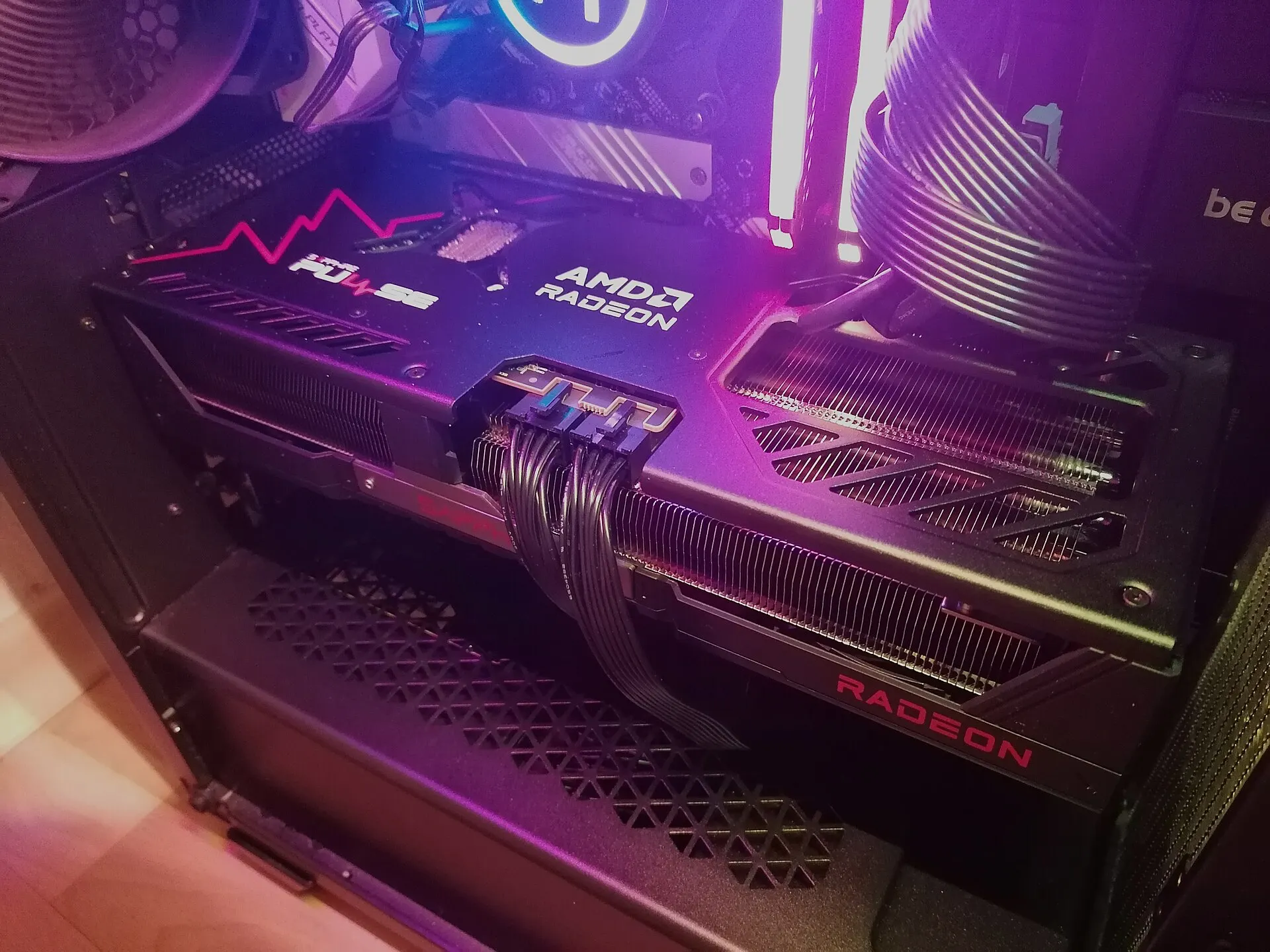
Tom’s Hardware: Best PC builds (October 14, 2026)Tom’s Hardware: RAM price index (October 26, 2026)Tom’s Hardware: CPU benchmark hierarchy (October 5, 2026)Tom’s Hardware: CPU deals (October 26, 2026)FPS per Dollar: Best GPUs for 1080p (October 29, 2026)NowInStock: RTX 5060 stock tracker (October 29, 2026)MaxMyBuild: US SSD prices (October 28, 2026)PC Gamer: Budget gaming PC build guide (October 21, 2026)Featured image: Sapphire Pulse Radeon RX 9070 XT installed in a PC by Chaddy, CC BY-SA 4.0 , via Wikimedia Commons